

Many English learners confuse dew and due because they sound exactly alike but have completely different meanings. Dew refers to tiny drops of water that form on cool surfaces, usually in the early morning. Due usually means something is expected, owed, scheduled, or required by a certain time. Since these words are homophones, using the wrong one can create spelling mistakes and confusion in writing. This guide explains the meaning, pronunciation, grammar, usage, and common mistakes for both words. You’ll also find practical examples, comparison tables, quizzes, and memory tips to help you remember the difference and use each word with confidence.
Quick Difference Table
| Word | Part of Speech | Meaning | Example | Common Usage |
| Dew | Noun | Tiny water droplets that form naturally | The grass was covered with dew. | Nature, weather, mornings |
| Due | Adjective, Noun | Expected, owed, or scheduled | My homework is due tomorrow. | Deadlines, payments, responsibilities |
Meaning of Dew
Meaning
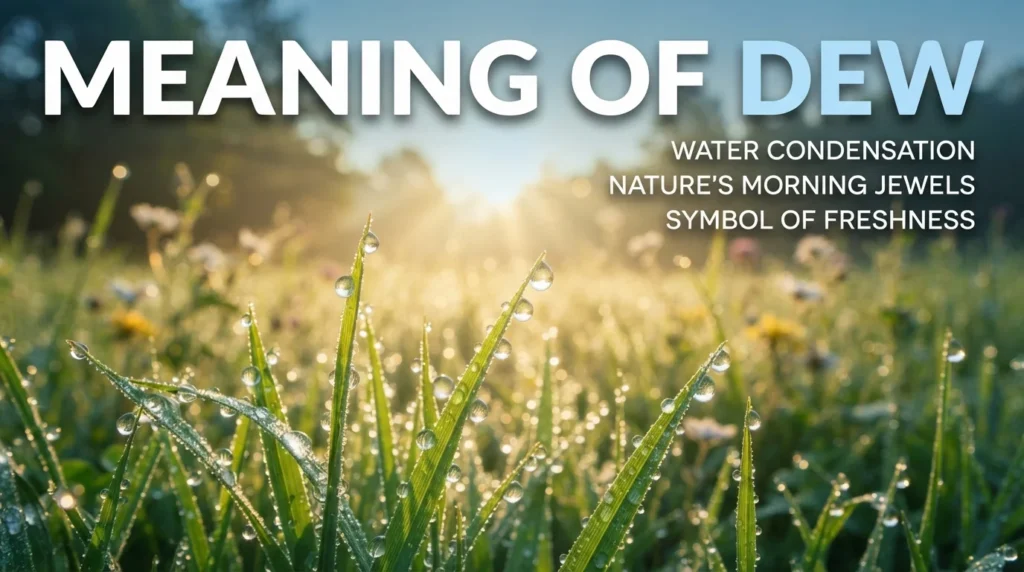
Dew is the tiny water that forms on grass, leaves, flowers, cars, and other cool surfaces during the night or early morning. It forms when water vapor in the air cools and changes into liquid.
Pronunciation
| Feature | Details |
| IPA | /duː/ |
| American Pronunciation | doo |
| British Pronunciation | doo |
| Syllables | 1 |
| Word Stress | Dew |
Pronunciation Tips
- Rhymes with new, blue, and true.
- Say it as one long “oo” sound.
- It sounds exactly the same as due.
Function
Part of Speech
Noun
Grammar Role
Acts as the subject or object in a sentence.
Sentence Function
Names a natural substance.
Common Grammatical Patterns
- dew on the grass
- morning dew
- covered with dew
- drops of dew
Knowing the difference between Aye and Eye helps clarify their distinct meanings, contexts, and grammatical roles.
Example Sentences
- The morning dew sparkled in the sunlight.
- Dew covered the flowers before sunrise.
- The children walked across the wet dew.
- Tiny drops of dew decorated every leaf.
- We waited until the dew disappeared.
- The grass felt cool because of the dew.
- Farmers noticed heavy dew this morning.
- Dew formed on the car overnight.
- Birds drank water from the fresh dew.
- The hikers admired the shining dew.
When to Use
Use dew when talking about:
- Water droplets on plants
- Early morning weather
- Nature
- Outdoor scenery
- Moisture formed naturally
Common Mistakes
Many learners write due when they mean dew because both words sound alike.
Incorrect: The flowers were covered with due.
Correct: The flowers were covered with dew.
Remember that dew always relates to water that forms naturally.
Meaning of Due

Meaning
Due means expected, required, owed, or scheduled to happen at a certain time. It can also describe money that should be paid or respect that should be given.
Pronunciation
| Feature | Details |
| IPA | /duː/ |
| American Pronunciation | doo |
| British Pronunciation | doo |
| Syllables | 1 |
| Word Stress | Due |
Pronunciation Tips
- Pronounced exactly like dew.
- Keep the vowel long.
- Listen to the surrounding words to understand which spelling is correct.
Function
Part of Speech
Adjective or noun
Grammar Role
Describes deadlines, obligations, or amounts owed.
Sentence Function
Shows expectation, responsibility, or timing.
Common Grammatical Patterns
- due tomorrow
- due next week
- payment due
- due date
- due to
- past due
Example Sentences
- My project is due on Friday.
- Your rent is due next week.
- The library book is due today.
- The payment is due before noon.
- She submitted the report before it was due.
- Our electricity bill is due tomorrow.
- His respect was due to years of hard work.
- The train is due to arrive soon.
- The final assignment is due at midnight.
- Your membership fee is now due.
When to Use
Use due when talking about:
- Deadlines
- Bills
- Payments
- Scheduled events
- Responsibilities
- Amounts owed
Common Mistakes
Some learners accidentally write dew when discussing deadlines.
Incorrect: My homework is dew tomorrow.
Correct: My homework is due tomorrow.
If you’re talking about time, payments, or obligations, use due.
Understanding Ice vs Snow meaning and differences helps clarify how these related forms of frozen water differ.
Side-by-Side Comparison
| Situation | Correct Word | Explanation | Example |
| Water on grass | Dew | Natural moisture | Morning dew covered the lawn. |
| Homework deadline | Due | Expected by a certain date | My essay is due Monday. |
| Wet leaves | Dew | Water droplets | Dew sparkled on the leaves. |
| Utility bill | Due | Payment required | The bill is due today. |
| Sunrise scenery | Dew | Weather phenomenon | Dew covered every flower. |
| Scheduled arrival | Due | Expected time | The flight is due at noon. |
| Garden moisture | Dew | Natural condensation | The roses were wet with dew. |
| Monthly payment | Due | Money owed | Rent is due tomorrow. |
| Morning walk | Dew | Outdoor moisture | My shoes became wet from the dew. |
| Assignment deadline | Due | Required submission date | The assignment is due next Friday. |
Practice Quiz
Fill in the Blanks
- The grass was covered with ______.
- My science report is ______ tomorrow.
- Tiny drops of ______ appeared on the flowers.
- Your credit card payment is ______ next week.
- The hikers admired the morning ______.
- The package is ______ to arrive by noon.
- Fresh ______ formed after the cool night.
- Our rent is ______ on the first day of the month.
- The spider web glistened with ______.
- The final exam fee is ______ today.
Choose the Correct Word
1. The flowers were covered with _____.
A. Due
B. Dew
C. Do
D. Dews
2. My homework is _____ tomorrow.
A. Dew
B. Dews
C. Due
D. Doing
3. The lawn was wet with _____.
A. Due
B. Dew
C. Do
D. Dues
4. The payment is _____ today.
A. Dew
B. Do
C. Due
D. Dews
5. Fresh _____ sparkled in the sunshine.
A. Dew
B. Due
C. Dues
D. Doing
6. The report is _____ next Monday.
A. Dew
B. Due
C. Do
D. Dews
7. We saw morning _____ on every leaf.
A. Due
B. Dew
C. Dues
D. Doing
8. The train is _____ at 6 p.m.
A. Dew
B. Due
C. Do
D. Dews
9. The grass was wet because of the _____.
A. Dew
B. Due
C. Dues
D. Doing
10. Your application is _____ by Friday.
A. Dew
B. Due
C. Do
D. Dews
Answer Key
- Dew, Morning moisture forms naturally on grass.
- Due, Homework has a deadline.
- Dew, Lawns become wet from natural water droplets.
- Due, Payments have required dates.
- Dew, It refers to water droplets.
- Due, Reports have submission deadlines.
- Dew, Leaves collect natural moisture.
- Due, Scheduled arrivals use due.
- Dew, The grass is wet from condensation.
- Due, Applications have deadlines.
Final Thoughts
Although dew and due sound exactly the same, their meanings are entirely different. Dew refers to the tiny droplets of water that appear on cool surfaces in the morning, while due relates to deadlines, payments, schedules, or responsibilities. A simple memory trick is this: dew begins with “D” for droplets, while due begins with “D” for deadlines. Whenever you’re writing, think about the context. If you’re describing nature or weather, choose dew. If you’re discussing time, obligations, or something expected, choose due. Practicing these words in everyday sentences will help you remember the difference and improve your writing accuracy.
Frequently Asked Questions
What is the difference between dew and due?
Dew means natural water droplets, while due means expected, owed, or scheduled.
Are dew and due pronounced the same?
Yes. They are perfect homophones and are both pronounced /duː/.
Is dew a noun?
Yes. Dew is primarily used as a noun.
Is due an adjective?
Usually, yes. It can also function as a noun in some contexts.
Can due refer to money?
Yes. It can mean money that must be paid.
Can dew be used as a verb?
In modern English, dew is almost always used as a noun.
Which word is used for homework?
Use due because homework has a deadline.
Which word is related to weather?
Dew is related to weather and natural moisture.
Why do people confuse dew and due?
Because they have identical pronunciation but different spellings and meanings.
How can I remember the difference?
Think of dew = droplets and due = deadline.
Is “payment dew” correct?
No. The correct phrase is payment due.
Is “morning due” correct?
No. The correct phrase is morning dew.

Caitlin Boylan is an experienced content writer, editor, educator, travel writer, and remote worker with more than 10 years of experience in English education and international communication. She is the founder and author of The Country Jumper, a travel blog dedicated to supporting solo travelers, especially women exploring life abroad. She is also the co-founder of Macro Magazine, a global online publication that shares diverse perspectives on worldwide topics that impact communities.
1 thought on “Dew vs Due: Learn the Difference and Use Them Right”