Baize vs Bays : Difference, Meaning & Pronunciation Guide
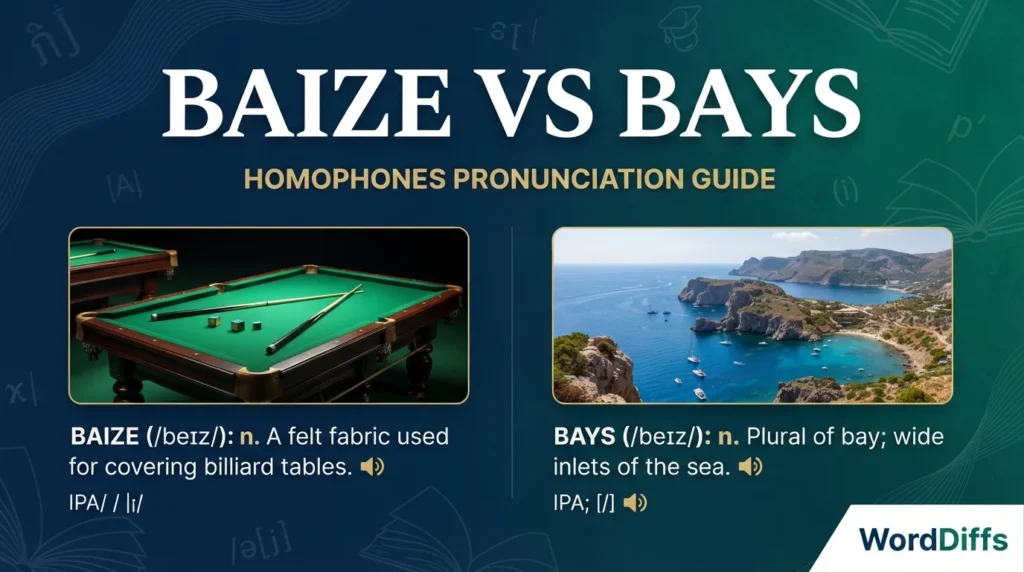
English homophones often confuse learners because they sound alike but have different spellings and meanings. Baize and bays are excellent examples of this challenge. Although ...

English homophones often confuse learners because they sound alike but have different spellings and meanings. Baize and bays are excellent examples of this challenge. Although ...
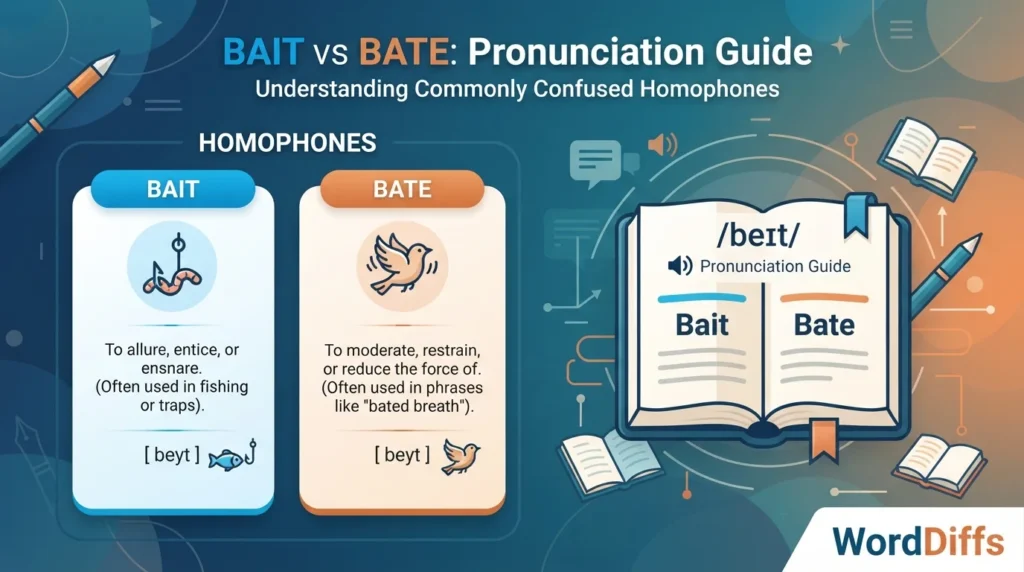
English homophones often confuse learners because two words can sound almost identical while having completely different meanings and spellings. Bait and bate are excellent examples. ...
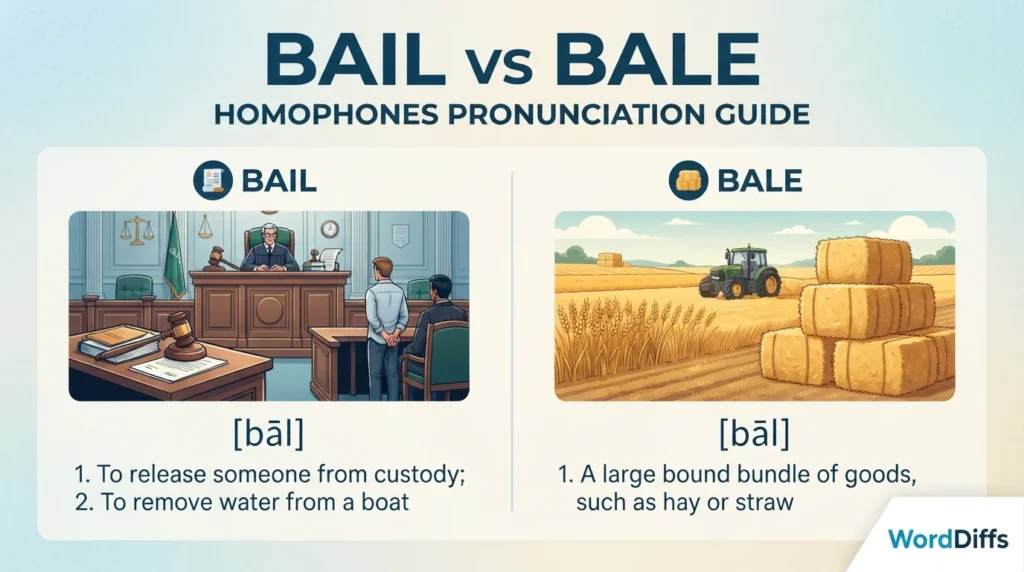
English homophones often challenge learners because two or more words share the same pronunciation but have different spellings and meanings. Bail and Bale are excellent ...
English learners often find Aye vs Eye confusing because these two words have the same pronunciation but completely different meanings, spellings, and uses. Since they ...

English learners often find Axel and Axle confusing because they are pronounced the same in standard English but have completely different meanings and uses. Since ...

Many English learners confuse Preform vs Perform because these words look almost identical. They differ by only one letter, but that small spelling difference completely ...
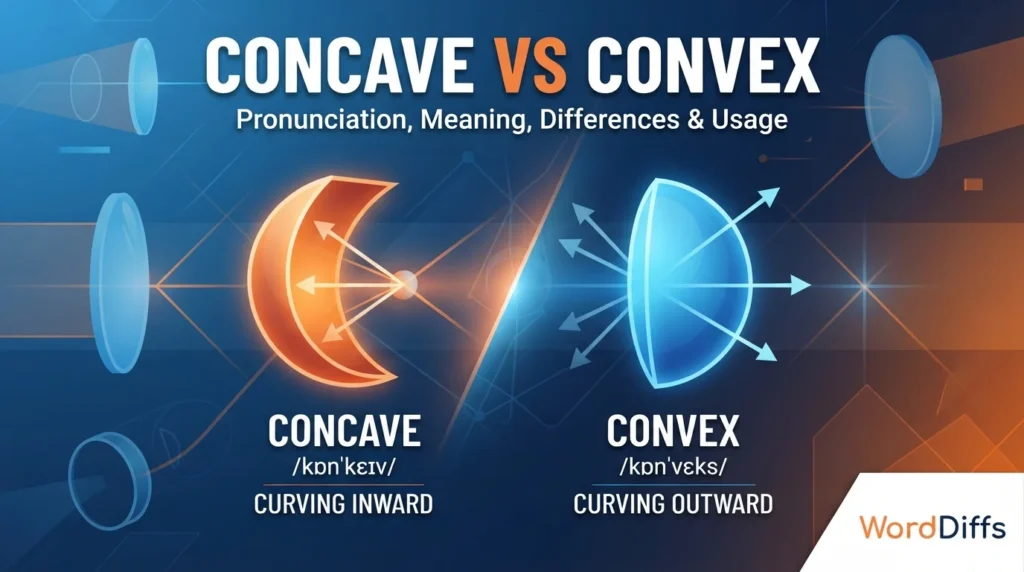
When learning English, some words are difficult because they describe similar ideas but have opposite meanings. Concave vs Convex is one such comparison. These words ...
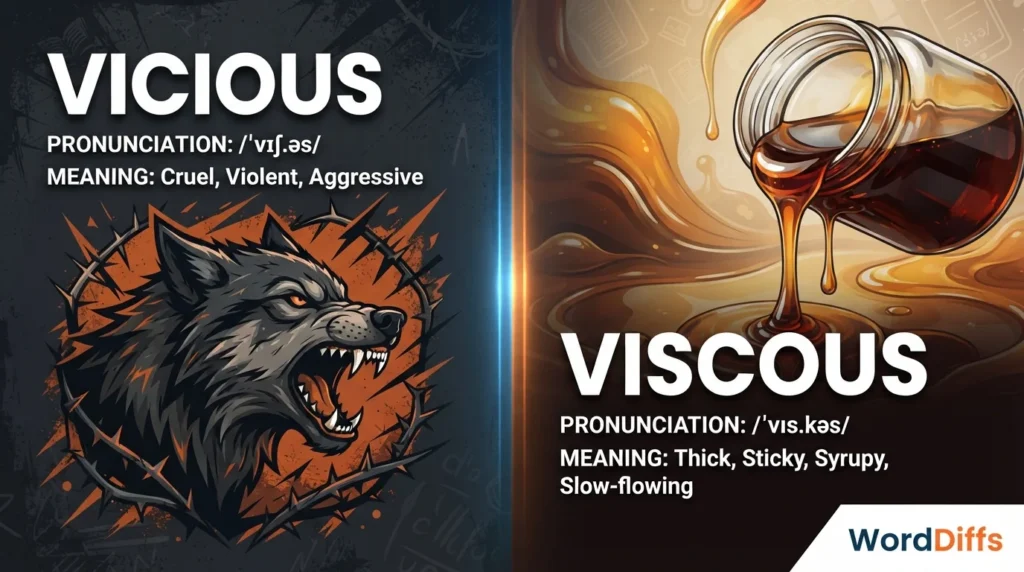
Many English learners confuse vicious vs viscous because the words look almost identical and share a similar spelling pattern. However, they have completely different meanings ...
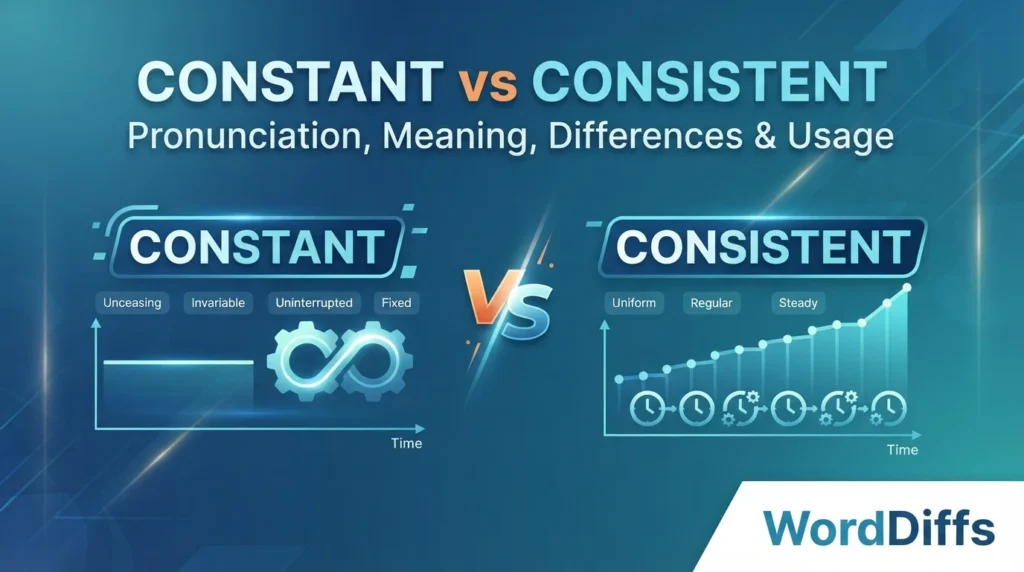
Many English learners confuse constant and consistent because both words describe something that continues over time. They are often used when talking about habits, behavior, ...

Many English learners and even experienced writers wonder whether they should write High Quality or High-Quality. The confusion comes from the fact that both forms ...